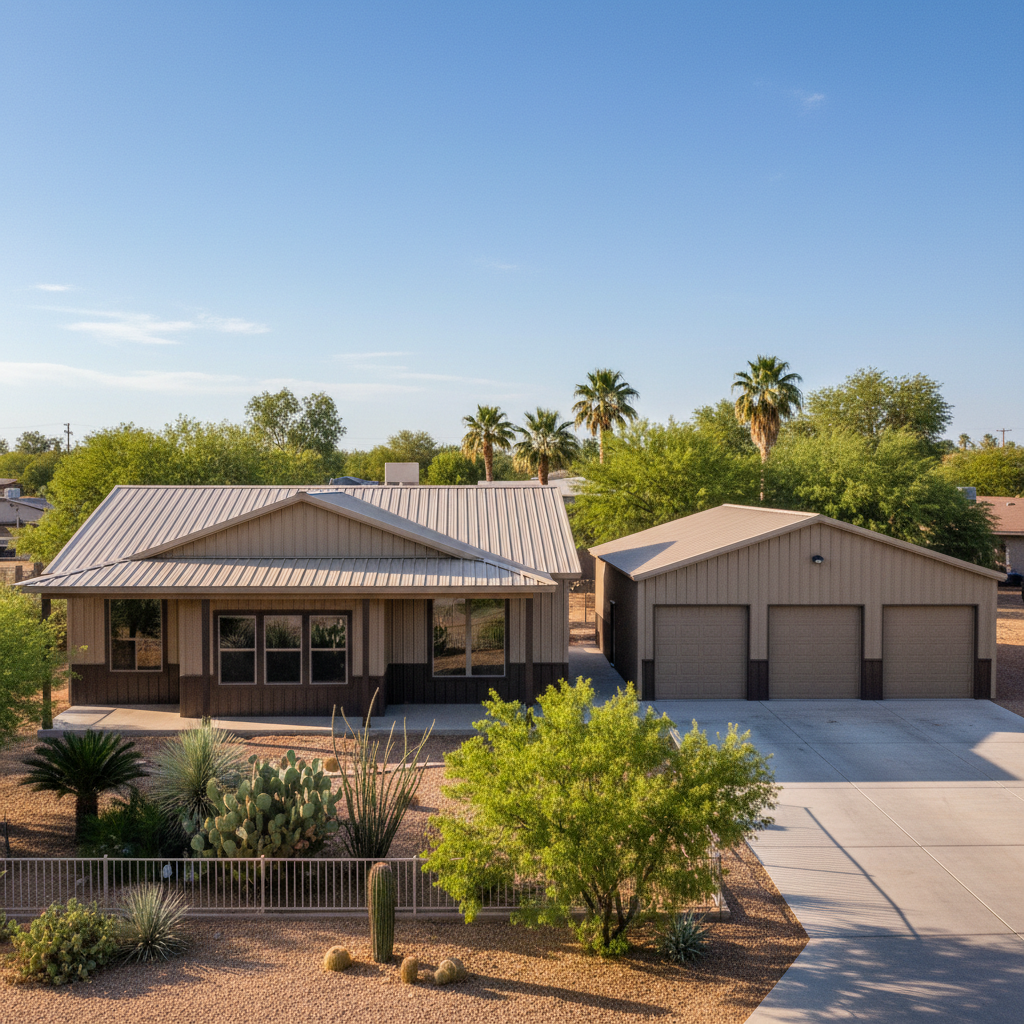
Driving a shovel into the ground out near the Twin Peaks area during a dry July is difficult. The ground feels like concrete. That caliche soil gives property owners trouble when they are planning a new build. Flimsy sheds warp in the desert sun or blow over when the monsoon winds whip down off the Tortolita Mountains. Marana Metal Buildings recommends post-frame construction for these conditions. Marana Metal Buildings has been putting up structures across this valley for years, and post-frame buildings stand out for a reason.
Why Post-Frame Works Here
Traditional stick-built framing takes a long time and struggles against the sheer thermal swing in southern Arizona. Temperatures go from freezing early morning lows in January to blistering triple digits by afternoon. Wood expands, contracts, and splits. Post-frame construction uses large treated columns embedded deep into the ground or anchored onto heavy concrete piers, carrying the roof load directly to solid earth. This bypasses the weak topsoil layer entirely.
Marana Metal Buildings designs these frames to handle massive clear spans without interior load-bearing walls. An open interior layout is created, and the space is ready for anything.
Common Projects We See Around Town
Drive out toward Sansing or down past Picture Rocks, and post-frame buildings are visible everywhere. Property owners use these buildings for several common purposes:
- RV and trailer storage to keep the UV rays off expensive paint and rubber seals
- Workshop spaces for local mechanics and fabricators who need high ceilings
- Custom barndominiums featuring wraparound porches to catch the evening shade
- Agricultural barns for tack, feed, and equipment storage
Beating the Desert Climate
Monsoon season brings intense localized microbursts. A standard cheap shed does not stand a chance against 70-mph crosswinds if it is not anchored properly. Post-frame engineering ties the roof trusses directly to heavy posts using engineered steel brackets and sheer plates. The whole structure acts as a single unit. When the wind hits, the building flexes slightly instead of tearing apart.
Roof pitch matters too. Marana Metal Buildings usually recommends a 4:12 or greater pitch to shed any rare heavy downpours quickly while maximizing attic space for blown-in insulation. Keeping that shed heat out of your workspace is half the battle when August rolls around.
Working With Local Ground Conditions
Permitting through the Town of Marana or Pima County requires adherence to strict wind and snow load standards—occasional dustings happen up on the higher elevations—and proper drainage plans. Caliche soil does not absorb water well during heavy summer rains. If pad grading is not sloped right, water pools around the shop.
Getting the concrete and post-depth right the first time saves thousands of dollars in foundation repairs down the road. For property owners in Marana, Marana Metal Buildings provides Post-Frame Construction services to build durable workshops, barns, and garages that outlast the desert weather.